

|
Blackcaps |
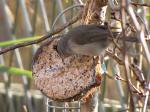
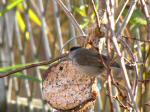
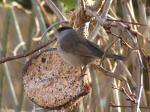
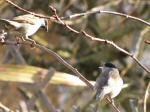
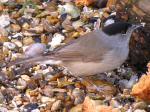
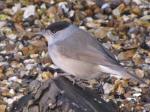
Latin name - Sylvia atricapilla A member of the warbler family, the Blackcap is a warbler has a distinctive black (male) or red-brown (female) cap from which it gets its common name. It is slightly smaller than a House Sparrow, the male, apart from its glossy black cap is greyish brown, lighter underneath while the female is slighter browner with its chestnut cap. Juvenile birds look similar to the female with brownish caps, blacker in young males and yellowish in young females. Although blackcaps are summer visitors, increasing numbers are over-wintering in Britain, mainly in England. Most of these birds have migrated from northern and central Europe although they is a small resident population. It is thought that the milder winters,the benefit of avoiding the journey over the Alps to their normal wintering quarters in southern Europe and North Africa and the advantage of returning to their breeding grounds sooner than those that still migrate further south have encouraged this. Birds that over-winter have taken to visiting gardens as in these photographs taken in our own garden on the 27th December 2009. These birds have adapted to utilising the different types of food available in winter taking fat, bread, peanuts, cheese, porridge oats, potato and coconut from garden feeders. Their more traditional diet is chiefly of insects with berries also being taken in late summer and autumn. There is also evidence that the Blackcaps that are over-wintering here in Britain are developing changes in their wings and bills that reflect their shorter flight routes and changed diets. They also tend to pair amongst themselves rather than with the ones wintering further south.This has given rise to the speculation that a new sub-species may evolve. Migratory birds arrive back in Britain in April and May, leaving again in September and October although we are also visited by migrating Blackcaps on their way south to Spain and Portugal. Blackcaps are usually seen in areas with plenty of trees and shrubs with the female building a neat cup nest in a hedge, bush or brambles fairly low down. There are 1 or 2 clutches laid, usually with 3 to 6 eggs,incubation is carried out by both parents and lasts for 11 to 12 days. The young fledge in 10 to 14 days. |
 |
 |
 |
 |
 |
 |
 |
|
|
|
|
|